
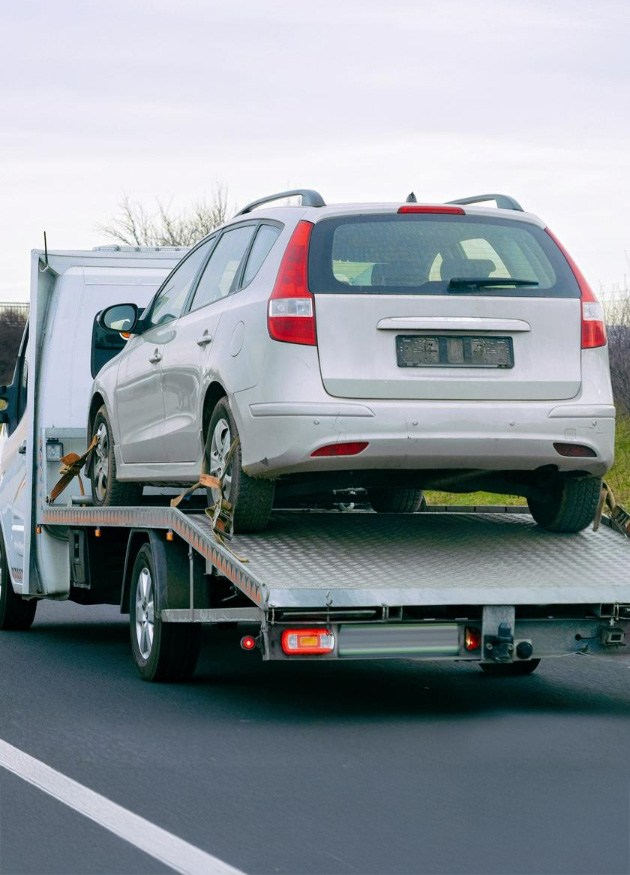
Medium-duty towing is different from a standard roadside tow. It is meant for vehicles that are bigger than regular cars but not as large as heavy trucks, like box trucks, work vans, shuttles, and many RVs. If these vehicles break down or get into an accident, their extra weight, longer wheelbases, and special drivetrains make regular towing risky. Using the right equipment and loading methods helps avoid more damage, saves time, and keeps the road safe.
This page covers what medium-duty towing is, the equipment used, and the steps professionals take from your first call to the end of the job.
What comes under Medium Duty Towing?
Medium-duty towing means professionally towing and recovering Class 3 to Class 6 vehicles, which usually weigh between 10,001 and 26,000 pounds. This includes box trucks, city delivery vans, bucket trucks, and other commercial vehicles that need stronger equipment than regular cars.
When Medium Duty Towing Services Are Needed?
Medium-duty towing is needed when a vehicle’s size, weight, or drivetrain makes a regular wheel-lift tow unsafe or not allowed. Common situations include:
- Mechanical breakdowns that make the vehicle unstartable
- Accident recovery where the vehicle cannot be driven safely
- Blowouts or wheel damage that prevent safe roadside repair
- Stuck situations such as soft ground, snow, mud, or a ditch (often requiring winching and controlled recovery)
- Planned transport for fleet moves, relocations, or repair routing
What is the process of Medium Duty Towing?
Medium-duty towing follows a controlled, safety-first process designed for larger vehicles. As these vehicles have higher weight, different braking systems, and more complex drivetrains than passenger cars, each step, from dispatch to securement and transport, must be handled with the right equipment and procedures to prevent additional damage and reduce roadway risk.
Step 1: Incident Assessment and Dispatch
The process starts as soon as your call reaches the dispatch center. The operator collects important details to send the right truck. Medium-duty vehicles are very different from regular cars in size, weight, and ground clearance.
Crucial information gathered includes:
- Vehicle Weight and Dimensions: Determining if the vehicle fits the medium-duty criteria or requires heavy-duty equipment.
- Location and Accessibility: Whether the vehicle is on a highway shoulder, stuck in mud, or in a height-restricted parking garage.
- Load Status: A loaded box truck reacts differently to towing forces than an empty one.
- Mechanical State: Information on whether the wheels are locked or if the driveshaft is intact.
Step 2: Equipment Selection
Towing companies use special trucks for medium-duty jobs. The two main types are flatbed carriers and integrated wreckers.
Flatbed carriers, or rollbacks, are often used when a vehicle can’t roll on its own wheels. This method lifts the whole vehicle off the road, making it the safest choice for all-wheel-drive vehicles or those with bad suspension damage. The hydraulic bed lowers to the ground so the vehicle can be winched onto the platform.
Integrated wreckers have both a boom and a wheel-lift. They work well for vehicles that are too tall or long for a flatbed. The wheel-lift holds either the front or rear wheels, leaving the other set on the ground. This setup makes it easier to move vehicles in tight city spaces.
Step 3: Site Safety and Vehicle Preparation
In this step, the tow operator first secures the scene by setting cones or flares to create a safe work zone, then prepares the vehicle for transport to avoid mechanical damage. If a rear-wheel-drive vehicle is being towed with the rear wheels on the ground, the driveshaft is disconnected so the transmission does not turn without proper lubrication. For trucks with air brakes, the operator may need to manually engage or release the brakes when the engine is not running, allowing the wheels to roll freely.
Step 4: Hook-Up and Securement
The physical connection between the tow truck and the disabled vehicle requires precision. The operator attaches heavy-duty chains or straps to the frame or axle, avoiding fragile components like brake lines or suspension sensors.
Weight distribution is very important. If too much weight is on the back of the tow truck, steering can become unsafe. If too much weight stays on the towed vehicle’s axles, it might sway. Operators figure out the center of gravity to keep the tow stable.
Secondary Safety Measures:- Federal and state regulations require the use of secondary safety chains. These chains act as a fail-safe if the primary coupling fails. The operator also installs auxiliary tow lights on the rear of the disabled vehicle. These lights mimic the tow truck’s braking and signaling actions to alert following traffic.
Step 5: Transport and Delivery
During transport, the operator must stay alert. The extra weight from both vehicles means it takes longer to stop. The operator drives carefully, avoiding sudden lane changes or hard braking.
When the tow truck gets to the destination, whether it’s a repair shop, dealership, or storage lot, the vehicle is unloaded. The operator undoes the steps used to secure the vehicle, like releasing the parking brakes and reconnecting the driveshaft if needed. A final check makes sure the vehicle is in the same condition as when it was picked up.
Reliable Recovery in Lehigh Valley
When medium-duty towing is done right, it reduces downtime and keeps your vehicles safe. Ironhook Towing offers expert recovery services in Whitehall Township, Fullerton, Allentown, and the Lehigh Valley. Our team handles everything from delivery vans to RVs, always focusing on safety and efficiency. We make sure your vehicle gets where it needs to go without problems. Call Iron hook Towing at (484) 426-0363 for fast, professional help.
What is the cost of Medium Towing Services?
Medium duty towing pricing is usually built from a base dispatch charge plus transport and any recovery work needed. For planning purposes, a common estimate range is $150 to $350 for the hook-up or call-out, about $5 to $10 per mile (medium duty often prices above light duty mileage averages), $200 to $400 per hour for recovery or winching, and about $85 to $150 per day for storage when the vehicle remains at a tow facility. Published municipal and state rate schedules show medium duty work is frequently billed by time on scene, with examples including $400 per hour caps in some police-ordered towing schedules and $50 per 15 minutes for certain medium duty recovery line items, plus daily storage rates that can be around $85 to $100 per day depending on the schedule.
Costs increase when the job involves winching, accident recovery, rollovers, restricted access, or hazardous conditions, and mileage typically applies beyond an included service radius. Storage charges add up daily when a vehicle is held, and insurance or towing-and-labor coverage may reimburse part of the bill, but limits and eligible situations vary by policy and carrier.
Extra fees may be charged for winching, accident recovery, or working in dangerous conditions. Storage fees add up for vehicles kept at towing facilities, with daily rates based on vehicle size and local rules. Insurance often covers towing, but policy limits may not pay for all medium duty towing costs.
Why Choose Professional Medium Duty Towing Services
Professional medium duty towing gives you expert help, the right equipment, and liability protection that you don’t get with DIY towing. Certified operators know how to manage weight and avoid extra damage during recovery. Commercial-grade equipment makes tough jobs safer and more efficient.
Trusted towing companies carry full insurance, so you’re protected from liability while your vehicle is being transported. They are available 24/7, so you can count on a quick response any time you need help. The paperwork they provide also helps with insurance claims and gives you legal protection if there’s an accident.
Contact Iron hook Towing for Reliable Medium Duty Towing Services
If your commercial vehicle or RV needs professional medium-duty towing, Iron hook Towing offers fast, reliable service in the area. Our certified operators and modern trucks safely move vehicles up to 26,000 pounds. With fair prices, 24/7 service, and a focus on customer satisfaction, we’re ready to help with your towing needs. Call us now for expert help and see how our experience and equipment protect your vehicles and keep your business running smoothly.